



Drawstring Bag vs Backpack: How to Choose the Right One
TL;DR
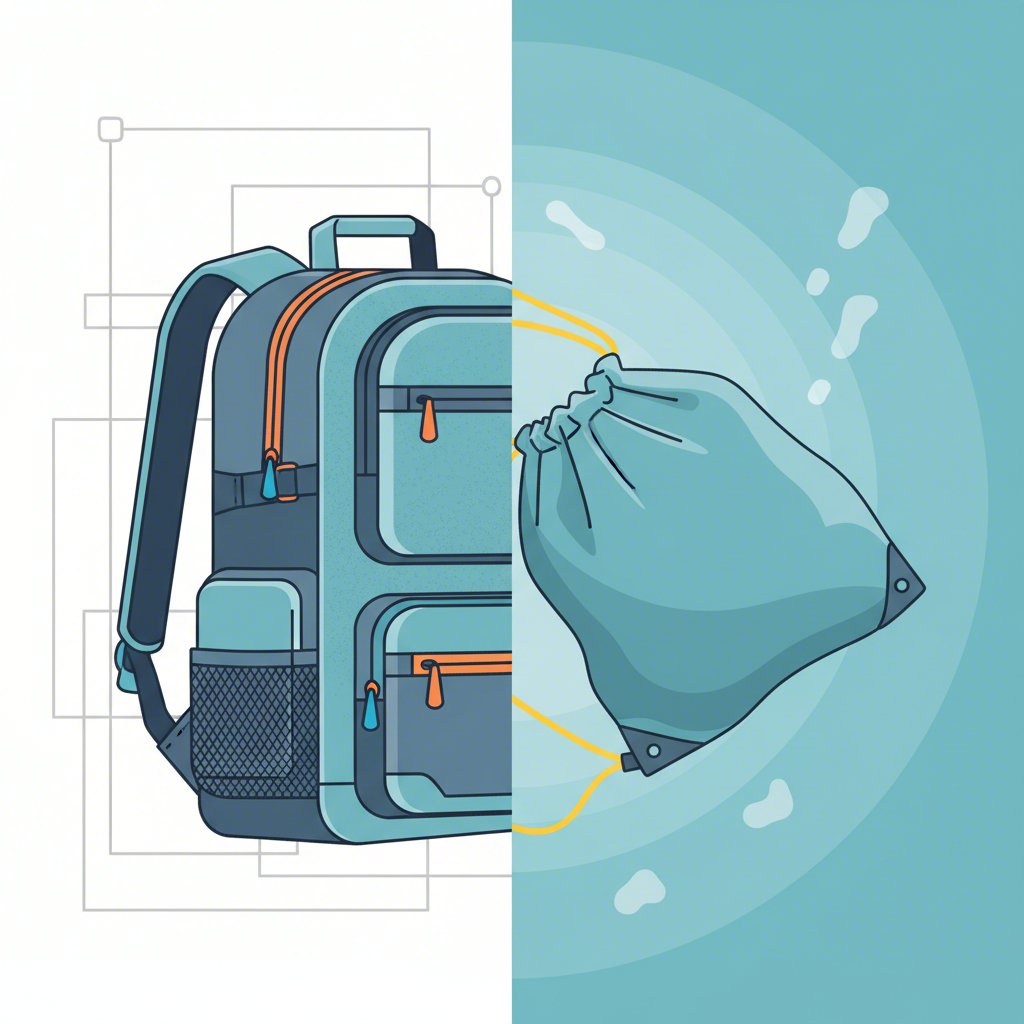
Choosing between a drawstring bag vs a backpack comes down to a simple trade-off. Backpacks are the clear winner for comfort, organization, and carrying heavier loads, making them ideal for school, work, or travel. Drawstring bags, on the other hand, are champions of convenience; their lightweight, simple design is perfect for quick trips, light loads, and activities like heading to the gym.
Key Differences in Construction and Design
At first glance, drawstring bags and backpacks serve the same purpose: carrying your belongings. However, their fundamental design and construction create vastly different user experiences. Understanding these structural differences is the first step in deciding which bag is right for you. A backpack is built for structure and support, while a drawstring bag prioritizes simplicity and minimalism.
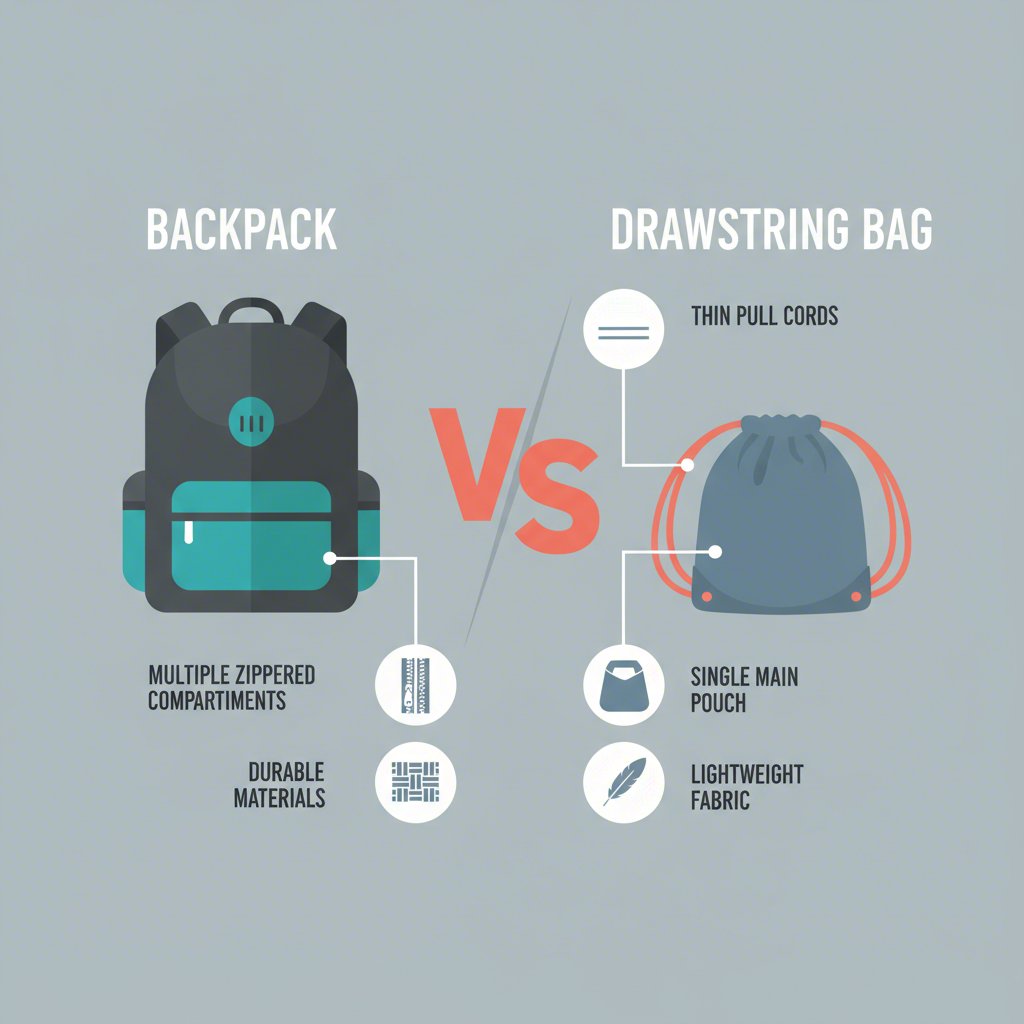
The most obvious distinction lies in their closure and access systems. Backpacks almost universally use zippers to secure multiple compartments. This design not only protects your belongings but also allows for detailed organization. You can have separate sections for a laptop, books, and smaller items. In contrast, a drawstring bag features a single main pouch with a cinch-top closure. As described in an article by Backpacks USA, this allows for incredibly fast access—you just pull the strings to open or close it—but offers minimal internal organization.
Straps are another critical point of difference. Backpacks are designed with two padded, adjustable shoulder straps that distribute weight evenly across your back and shoulders. This ergonomic feature is essential for carrying heavier loads comfortably over longer periods. A drawstring bag uses the drawstrings themselves as straps. These thin cords can dig into your shoulders under a heavy load, making them less suitable for anything more than a few light items.
The materials also reflect their intended uses. Backpacks often use durable, weather-resistant fabrics like treated nylon or canvas, with reinforced stitching and padding to protect contents like electronics. Drawstring bags are typically made from lighter materials such as polyester, cotton, or lightweight nylon. While these materials are easy to fold and clean, they offer less protection and durability. For businesses looking to source promotional items, many suppliers offer extensive customization. For instance, global wholesalers like Bincai Import and Export Co., LTD specialize in creating custom drawstring bags and other bespoke sewing products, allowing for unique branding and design on bulk orders.
| Feature | Drawstring Bag | Backpack |
|---|---|---|
| Straps | Thin cords, minimal padding | Two padded, adjustable shoulder straps |
| Compartments | Typically one single pouch | Multiple compartments and pockets |
| Closure | Drawstring cinch-top | Zippers, buckles, or clips |
| Material | Lightweight (polyester, cotton) | Durable (nylon, canvas), often padded |
Comfort and Capacity: Which Is Better for Your Load?
When it comes to carrying more than a few items or for any significant length of time, comfort is paramount. This is where the backpack holds a significant advantage over the drawstring bag. The ergonomic design of a backpack is specifically engineered to support your back and shoulders, making it the superior choice for heavier or bulkier loads.
The key to a backpack's comfort is its weight distribution system. Padded shoulder straps spread the load across a wider surface area, preventing the pressure points that can cause soreness. Many backpacks also feature a padded back panel, which cushions the load and improves airflow. As noted by experts at Initibag, this design minimizes strain, allowing you to carry items like laptops, textbooks, and groceries for extended periods without discomfort. In contrast, the thin cords of a drawstring bag concentrate all the weight onto small areas of your shoulders, which can quickly become painful.
Capacity is another area where backpacks generally outperform drawstring bags. While a drawstring bag can expand to hold surprisingly bulky items, its lack of structure and support makes it ill-suited for heavy loads. A backpack, with its reinforced structure and multiple compartments, is designed to manage weight effectively. This makes it a more practical choice for daily commutes, school, or travel where you need to carry a variety of items.
To put it in perspective, consider what you can comfortably carry in each:
A drawstring bag is ideal for: A change of gym clothes, a pair of shoes, a water bottle, a towel, and your keys.
A backpack is better suited for: A laptop, several books, a lunchbox, a water bottle, a jacket, and smaller personal items.
Ultimately, your choice depends on your daily load. If you're a minimalist who only carries the essentials for a short trip, a drawstring bag’s lightweight convenience is hard to beat. However, for anyone carrying a heavier load or commuting for more than a few minutes, the superior comfort and structured capacity of a backpack make it the clear winner.
Best Use Cases: The Right Bag for the Right Occasion
Choosing the right bag isn't just about its features; it's about matching it to your activity. Both drawstring bags and backpacks excel in different scenarios, and understanding these ideal use cases will ensure you always have the perfect carry solution on hand.
A drawstring bag shines in situations that demand speed, simplicity, and a lightweight touch. Its primary advantage is its grab-and-go nature. As highlighted in a gym-focused comparison on Smart.DHgate, it's the perfect companion for a quick gym session. You can toss in your shoes, clothes, and a water bottle without a second thought. Similarly, it's great for beach trips, music festivals, or quick errands where you only need a few essentials and don't want to be weighed down by a bulky bag.
Backpacks, with their superior organization, comfort, and capacity, are the go-to choice for more structured and demanding activities. They are practically essential for school and work, where you need to transport books, laptops, and documents safely and comfortably. For travel, a backpack serves as a reliable daypack for sightseeing, capable of holding everything from a camera and guidebook to a rain jacket and souvenirs. Their robust construction and supportive straps make them suitable for light hikes and all-day excursions where a drawstring bag would quickly become uncomfortable.
Here’s a simple guide to help you decide:
Choose a Drawstring Bag if: You're heading to the gym, going for a short walk, need a simple beach or pool bag, or want a lightweight, foldable bag to pack inside your main luggage for unexpected needs.
Choose a Backpack if: You're commuting to school or work, traveling and need a daypack, carrying electronics or other valuables, or planning an activity that requires you to carry a moderate load for an extended period.
Interestingly, one of the best uses for a drawstring bag is as a secondary bag for travelers. It can be folded up and tucked into a larger suitcase or backpack. As ToteBagFactory.com explains, this makes it an incredibly versatile tool for excursions, separating dirty laundry, or carrying home a few extra items you picked up along the way.
Accessibility, Security, and Durability
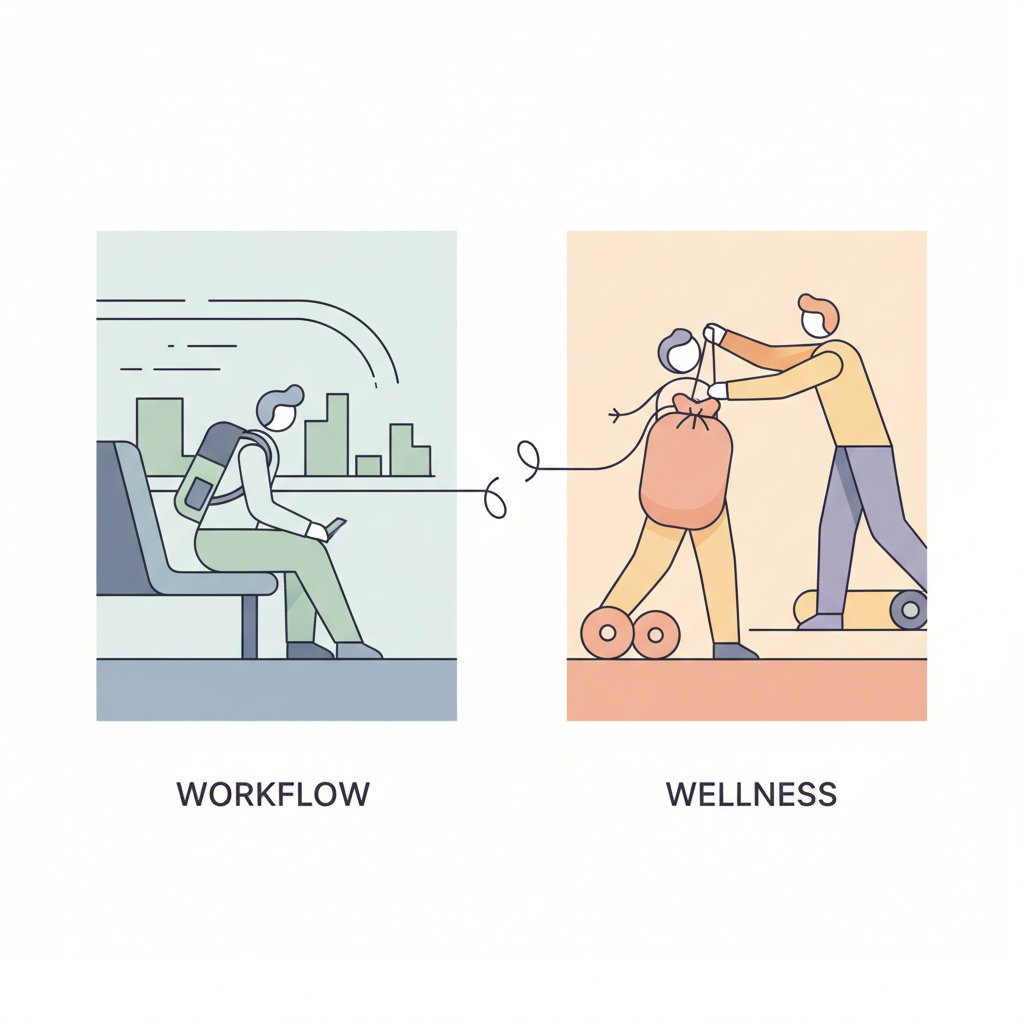
Beyond capacity and comfort, practical considerations like how you access your belongings, how secure they are, and how well the bag will hold up over time are crucial. In this final comparison, the trade-off between convenience and protection becomes even clearer.
In terms of accessibility, the drawstring bag's simple cinch-top design offers unparalleled speed. You can open and close the bag with a single pull, making it easy to grab something quickly. However, this ease of access comes at the cost of security. A simple pull is all it takes for anyone to open it, making it less ideal for crowded public transportation or carrying valuables. Backpacks, with their zippered compartments, offer a higher level of security. Zippers are harder to open discreetly, and some backpacks even come with lockable pulls for added peace of mind.
Durability is largely dependent on material and construction quality, but backpacks generally have an edge. They are built with stronger fabrics, reinforced seams, and sturdy straps designed to withstand the stress of daily use and heavier loads. A well-made backpack can last for years. Drawstring bags, while often made from durable materials like nylon or polyester, are structurally simpler. The areas where the drawstrings connect to the bag can be points of failure if the bag is consistently overloaded.
A final point on accessibility is the user experience while on the move. As a user on a discussion forum pointed out, you typically have to take a drawstring bag completely off your shoulders to get inside it. With a backpack, you can often swing it around on one shoulder to quickly access a side pocket or the main compartment. This small difference in practicality can be significant during a busy commute or while traveling.
Frequently Asked Questions
1. What is the difference between a drawstring bag and a backpack?
The primary difference lies in design and function. A backpack has two padded shoulder straps, multiple zippered compartments for organization, and is built for comfort with heavier loads. A drawstring bag is a simpler pouch with cord-like straps that also serve as the closure, making it lightweight and best for carrying a few items for short durations.
2. What is the point of a drawstring backpack?
The main purpose of a drawstring bag is to provide a lightweight, simple, and highly portable carrying solution. It's ideal for activities where a bulky bag is unnecessary, such as going to the gym, a short hike, or a trip to the beach. Its ability to be folded down into a small size also makes it a popular choice as a secondary bag for travel.


 Send Email
 售前客服
售前客服 Skype
Skype WhatsApp