



Find the Perfect Pencil Pouch for Artists
TL;DR
Finding the best pencil pouch for artists means balancing protection, organization, and portability. A great case should feature durable materials like canvas or nylon to shield your tools. Look for designs with multiple compartments or elastic loops to keep pencils, pens, and accessories secure and prevent damage to fragile tips, ensuring your supplies are ready whenever inspiration strikes.
How to Choose the Perfect Pencil Case for Your Art Supplies
Selecting the right pencil case is a crucial decision for any artist. It's more than just a bag; it's a mobile studio that protects your valuable tools. The ideal choice depends entirely on your specific medium, workflow, and whether you create in a studio or sketch on the go. Wooden pencils, for example, contain a fragile core that can break internally if dropped, making a protective case essential to avoid the frustration of a tip that constantly falls out during sharpening.
Your first step is to assess your needs. Consider the capacity and size required for your collection. Do you need a large case for a full set of colored pencils, or a compact pouch for a curated selection of sketching tools? Think about not just your pencils but also the accessories you use, such as erasers, sharpeners, blending stumps, and rulers. A case with dedicated pockets or larger loops can keep these items organized and prevent them from damaging your pencil points.
Material and durability are also paramount. Canvas and nylon are popular choices, offering a blend of flexibility and toughness that stands up to daily use. Leather cases provide a classic, professional look and age beautifully over time. For maximum protection, especially for fragile media like charcoal or pastels, a hard shell case made of plastic or metal might be the best option, though they are often bulkier. As noted by experts at JetPens, hard cases prevent external damage but may allow tools to rattle inside, so consider how your supplies will be secured within the case.
Finally, think about the organizational style that best suits your workflow. Do you prefer a simple zipper pouch for quick access, or a more structured format? Book-style cases open flat to display all your tools, while pencil rolls are excellent for artists who need to see their entire palette at once. Each style offers a different balance of accessibility, protection, and portability.
Key Considerations for Choosing a Pencil Pouch
Capacity: How many pencils and accessories do you need to carry?
Protection: Does your medium require a hard shell, padding, or simple tip protection?
Material: Do you prefer the durability of canvas, the elegance of leather, or the rigidity of a hard case?
Organizational Style: Do you need individual loops, open compartments, or a roll-up design for easy viewing?
Portability: Will you be traveling frequently, requiring a lightweight and compact design?
Top-Rated Pencil Pouches & Cases for Every Artist
Navigating the world of artist pencil cases can be overwhelming, but a few standout models are consistently praised for their design, durability, and functionality. These options cater to different artistic needs, from comprehensive studio organization to lightweight travel kits.
Lihit Lab Book Style Pen Case
Praised as a favorite by stationery experts, the Lihit Lab Book Style Pen Case is renowned for its versatility and thoughtful organization. It opens like a book, revealing multiple compartments of various sizes, including mesh pockets and pen loops. This design allows artists to neatly separate pens, pencils, erasers, and even small notebooks. Its durable nylon exterior is easy to clean, making it a practical choice for everyday use. While its structure can be a bit bulky for smaller bags, its capacity and organizational features are hard to beat.
Best For: Studio artists and students who need to organize a wide variety of tools.
Pros
Excellent organization with multiple compartments
Durable and easy-to-clean material
High capacity for its size
Cons
Can be bulky for travel
Limited protection against crushing
Global Art Pencil Roll Up Case
For artists who value seeing all their tools laid out at once, the Global Art Pencil Roll Up Case is an excellent choice. Recommended by JetPens for artists, this sturdy canvas roll features individual elastic loops that can hold up to 36 standard pencils. A key feature is the plastic flaps at the top and bottom that prevent pencil tips from breaking and stop tools from falling out when rolled. It also includes a small zippered pocket for accessories like sharpeners. The roll-up design is compact and secures with an elastic snap closure, making it a great companion for plein air sketching or workshops.
Best For: Colored pencil artists and sketchers who need quick, visible access to their tools.
Pros
Displays all pencils for easy selection
Protective flaps for pencil tips
Durable canvas construction
Cons
Elastic loops may not fit thicker pens or markers
Offers less protection from impact than a hard case
Derwent Traveller Pouch
When portability is the top priority, the Derwent Traveller Pouch is a fantastic minimalist option. Highlighted for its compact design by Three Points of the Compass, this small case holds six to eight pencils or pens. It features an adjustable elastic fastening that allows you to strap it directly onto a sketchbook, keeping your essential tools always at hand. While its capacity is limited, it is perfect for artists who embrace a lightweight setup for urban sketching or trail drawing. Its simple, effective design ensures your most-used pencils are secure and accessible without adding bulk.
Best For: Travel sketchers and minimalists who carry only essential tools.
Pros
Extremely lightweight and portable
Attaches directly to sketchbooks
Keeps pencils secure and handy
Cons
Very limited capacity
Minimal protection
A Deeper Dive: Comparing Pencil Case Styles
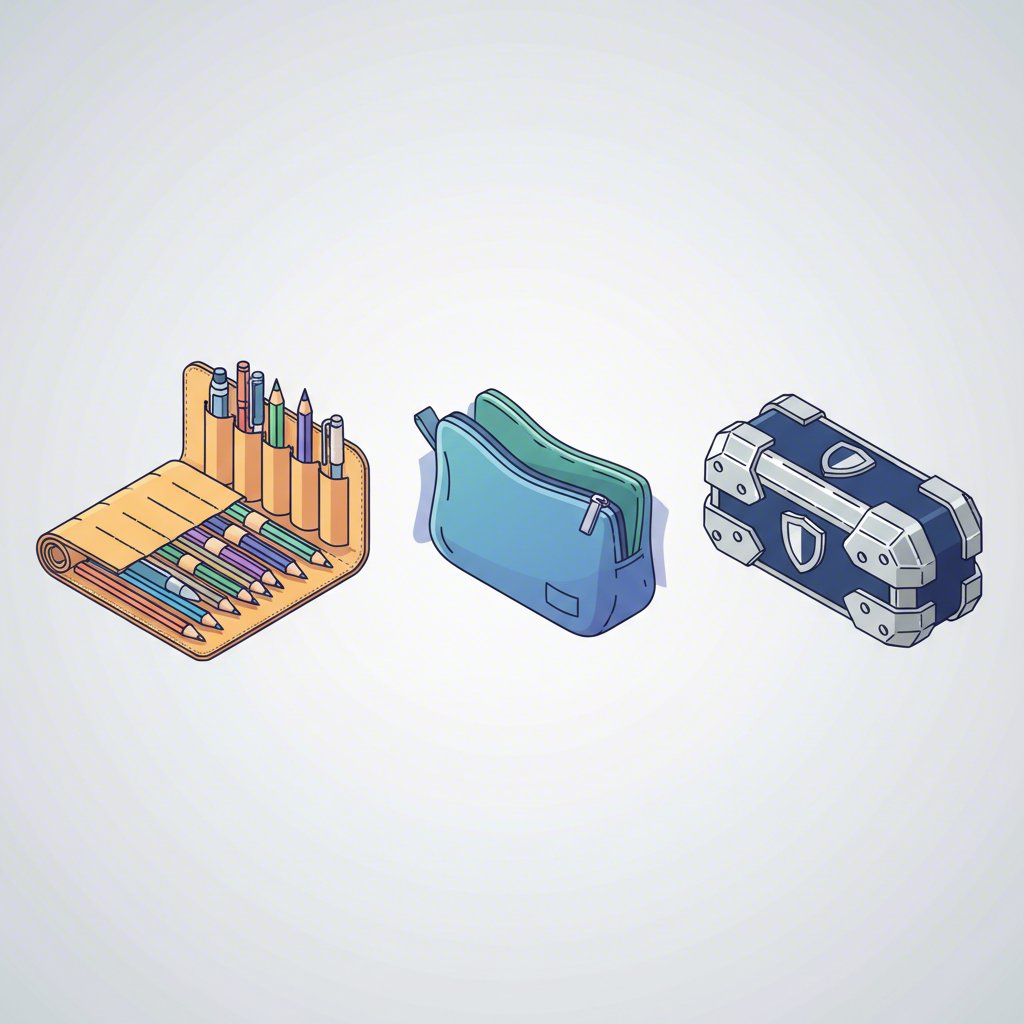
The structure of a pencil case dramatically impacts its usability. Understanding the core differences between styles—rolls, pouches, and hard cases—helps you match your storage to your artistic practice. Each format offers a unique combination of accessibility, protection, and portability.
Pencil Rolls/Wraps, like the CreeoGo Canvas Pencil Roll, are designed for visibility. When unrolled, they lay flat, displaying your entire collection of pencils or pens in neat rows. This makes finding the right color or tool incredibly efficient. Most are made of soft, flexible materials like canvas, which makes them lightweight and easy to pack. However, this flexibility means they offer less protection against crushing or impact compared to more rigid cases.
Zipper Pouches are the most common and versatile style. They range from simple, single-compartment bags to more complex organizers with multiple pockets. Their primary advantage is simplicity and speed—you can quickly toss your tools inside and zip them up. For those needing custom solutions, especially for promotional or bulk needs, companies like Bincai International specialize in custom mesh pencil pouches that offer durability and branding opportunities. While convenient, simpler pouches can become a jumble of supplies, potentially leading to damaged pencil tips if not packed carefully.
Book-Style and Hard Cases offer the highest level of organization and protection. Book-style cases, such as the Lihit Lab model, use flaps and dividers to create a structured interior where every tool has its place. Hard shell cases, made from materials like EVA foam or plastic, provide superior defense against drops, pressure, and moisture, making them ideal for protecting valuable or fragile tools like fountain pens or soft pastels. The trade-off is typically size and weight; these protective cases are often the bulkiest option.
Comparison of Pencil Case Styles
| Style | Primary Advantage | Best For | Portability | Protection Level |
|---|---|---|---|---|
| Pencil Roll/Wrap | Full visibility of tools | Field sketching, colored pencil artists | High (Lightweight and compact) | Low to Medium |
| Zipper Pouch | Quick access and versatility | Everyday carry, mixed media | High (Flexible and various sizes) | Low to Medium |
| Book-Style Case | Excellent organization | Students, studio use, pen collectors | Medium (Can be bulky) | Medium |
| Hard Shell Case | Maximum protection | Fragile media (charcoal, pastels), travel | Low (Often bulky and rigid) | High |
Frequently Asked Questions
1. What pencil do most artists use?
There is no single pencil that all artists use, as the choice depends heavily on style and preference. However, some of the most respected and widely used brands for graphite drawing include Faber-Castell 9000, Staedtler Mars Lumograph, and Derwent Graphic pencils. These are favored for their consistent quality, smooth application, and wide range of hardness grades.
2. How do artists store their pencils?
Artists use various methods for pencil storage based on their needs. Many keep pencils in their original tins for studio use to keep sets organized. For daily use or travel, dedicated pencil cases, pouches, or rolls are common to protect the pencils from breaking. Some artists also use desktop organizers or simple cups to keep their most frequently used tools within easy reach.
3. What is the best pencil case brand?
The "best" brand is subjective and depends on an artist's priorities—whether they need rugged protection, high capacity, or compact portability. Brands like Lihit Lab are highly regarded for their innovative organizational features in book-style cases. Derwent is well-known for practical, artist-focused designs like wraps and pouches. Global Art offers excellent roll-up and flat cases popular with colored pencil artists. Ultimately, the best brand is one that creates a product that fits your specific workflow and collection of tools.


 Send Email
 售前客服
售前客服 Skype
Skype WhatsApp