



A Retailer's Guide to Sourcing Silk Bath Cap Wholesale

TL;DR
Sourcing silk bath caps wholesale requires choosing between multi-brand B2B marketplaces like Faire and Alibaba or partnering with direct manufacturers for custom orders. The key decision factors for your business will be material quality, such as 100% pure Mulberry silk versus satin, and essential features like waterproofing, adjustable fits, and double-linings. Understanding Minimum Order Quantities (MOQs) and customization options is crucial for securing products that align with your brand and budget.
Why Stock Silk & Satin Bath Caps? Key Benefits for Retailers
In today's competitive retail landscape, offering products that blend everyday function with a touch of luxury can significantly elevate your brand. Silk and satin bath caps are premier hair care accessories that have grown in popularity due to their tangible benefits, making them a strategic addition to any beauty, wellness, or gift store. These are not just simple shower caps; they are a premium solution for hair protection.
The core value proposition for the end-user lies in hair health. Unlike traditional plastic caps, the smooth surface of silk or satin reduces friction against the hair cuticle. This helps in maintaining hairstyles, preventing frizz, and protecting delicate hair types, including curls, coils, and waves. The material helps retain moisture in the hair, preventing the dryness and brittleness that can occur from exposure to shower steam. This combination of luxury and protection is a powerful selling point for customers looking to invest in their hair care routine.
For your business, stocking these items translates to tangible advantages. Silk bath caps are perceived as high-value wellness products, allowing for healthier retail margins compared to standard accessories. They appeal to a broad demographic, from individuals with elaborate hair care routines to those simply seeking a more comfortable and effective shower cap. By offering a high-demand, functional luxury item, you position your store as a go-to source for quality self-care products.
To effectively communicate this value to your customers, focus on these key marketing points:
Frizz-Free Protection: Highlight how the smooth lining protects hair from humidity and friction, keeping styles intact.
Enhanced Hair Health: Explain that silk helps hair retain its natural oils, promoting shine and reducing breakage.
Luxury and Comfort: Emphasize the soft, premium feel and the quiet, no-crackle design for a spa-like experience.
Style Preservation: Market it as a tool to extend the life of blowouts, curls, and other salon treatments, saving customers time and money.
A Buyer's Guide to Wholesale Silk Bath Cap Features
When sourcing silk bath caps wholesale, the difference between a good product and a great one is in the details. A discerning buyer must look beyond the surface to evaluate material, construction, and design. Understanding these features not only ensures you stock a high-quality product but also empowers you to educate your customers on its value.
Material Quality
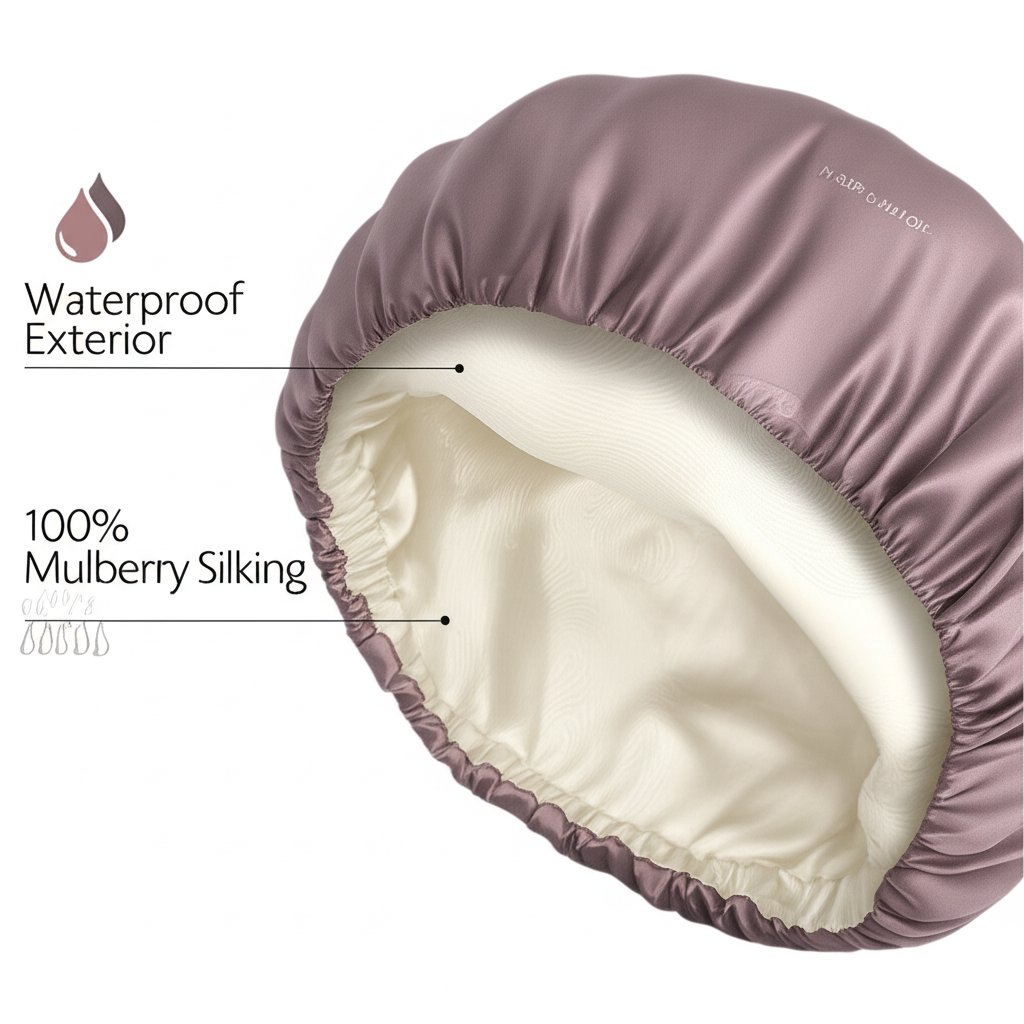
The term "silk" can be used loosely, so verifying the specifics is essential. Look for suppliers offering 100% Pure Mulberry Silk, which is widely considered the highest quality available. Some manufacturers specify the grade, such as Grade 6A, which indicates the longest and most uniform silk fibers, resulting in a smoother and more durable fabric. The fabric weight, measured in momme (mm), is another indicator of quality; weights like 19mm or 22mm offer a luxurious feel and excellent durability.
Construction and Design
A well-made bath cap is more than just its fabric. Look for functional features that enhance the user experience. A nano waterproof coating on the exterior provides a reliable barrier against water, while a double-lined design offers an extra layer of protection and durability. An adjustable fit, often achieved with a customizable soft elastic band or ribbons, ensures the cap is comfortable and secure for various head sizes and hair volumes. For customers with thick or long hair, offering an XL or oversized option is a crucial selling point.
Comparison: Pure Mulberry Silk vs. Satin-Lined
Your product mix may include both pure silk and satin-lined options to cater to different price points. Understanding the distinction is key.
| Feature | Pure Mulberry Silk Lined | Satin-Lined |
|---|---|---|
| Material | A natural protein fiber produced by silkworms. Hypoallergenic and breathable. | A synthetic fabric (e.g., polyester, nylon) with a glossy, smooth finish. |
| Hair Benefits | Actively nourishes hair by helping it retain moisture. Reduces friction to minimize frizz and breakage. | Reduces friction effectively but is not as breathable as natural silk. |
| Cost | Higher wholesale and retail price point due to raw material costs. | More budget-friendly, offering an accessible entry into the luxury hair care market. |
| Feel & Durability | Extremely soft, lightweight, and luxurious. Durable with proper care. | Smooth and soft, but may not have the same premium feel or longevity as pure silk. |
When evaluating samples, use this checklist:
Is the silk lining genuine and of the specified grade/weight?
Is the waterproof exterior effective and quiet?
Is the elastic band comfortable and sufficiently adjustable?
Is the stitching secure and high-quality?
Does the sizing accommodate a realistic range of hair volumes?
Top Sourcing Channels: Marketplaces vs. Direct Factories
Once you know what features to look for, the next step is finding the right supplier. The two primary channels for sourcing silk bath caps wholesale are large B2B marketplaces and direct-from-manufacturer partnerships. Each path offers distinct advantages depending on your business needs, order volume, and customization requirements.
B2B Marketplaces like Faire and Alibaba serve as intermediaries, connecting retailers with a vast array of brands and manufacturers. These platforms are excellent for discovering new products and comparing different styles and price points in one place.
Pros: Wide selection from multiple vendors, often lower Minimum Order Quantities (MOQs), streamlined ordering and payment processes, and the ability to filter for suppliers in specific regions like the USA.
Cons: Prices may be slightly higher to account for marketplace fees, and deep customization or private labeling options can be limited.
Sourcing from Direct Factories, such as specialized textile companies like Fstexsilk, involves building a relationship with the producer. This route is ideal for established businesses looking to create a unique product or order in large volumes.
Pros: Significant cost savings on bulk orders, extensive customization options (private label, custom colors, packaging), and direct control over the final product.
Cons: Typically requires much higher MOQs, may involve more complex communication and logistics, and requires a greater investment in vetting and relationship management.
For small boutiques or retailers new to the product, marketplaces offer a low-risk way to test the market. For larger retailers or brands aiming to launch their own line of hair accessories, partnering directly with a factory is the more strategic long-term choice.
Navigating Customization, Pricing, and MOQs
Engaging with a wholesale supplier, especially a direct factory, is a collaborative process that goes beyond a simple transaction. Understanding the dynamics of customization, pricing tiers, and Minimum Order Quantities (MOQs) is essential for a successful partnership.
Customization is a key benefit of wholesale sourcing, allowing you to create a product that is unique to your brand. Common customization options include adding your company logo to the cap or its packaging, selecting specific silk weights and colors, designing custom elastic bands, and creating bespoke retail packaging. This process, often called private labeling, transforms a generic product into a signature item for your store.
For instance, some suppliers specialize in comprehensive custom packages for various business needs. A great example is the ability to create curated gift sets, like Bincai Intl's 5-Piece Custom Silk Travel Set, which can be tailored for corporate gifting, hotel amenities, or promotional events. This demonstrates the potential for using high-quality silk products to elevate a brand beyond standard retail stock.
MOQ refers to the smallest order quantity a supplier is willing to accept. This can range from a few dozen units on a marketplace to several thousand when dealing directly with a factory. Pricing is almost always tiered, meaning the per-unit cost decreases as your order volume increases. It's crucial to clarify these thresholds to understand your total investment and potential profit margin.
To ensure a smooth and transparent process, be prepared to ask potential suppliers the right questions. Here is a list to get you started:
What are your Minimum Order Quantities (MOQs) for standard and custom orders?
Can you provide a tiered pricing list based on volume?
What are your specific customization capabilities (logo placement, fabric colors, packaging)?
What is the lead time for producing a sample and for a full production run?
Can you provide documentation or certification for your silk quality (e.g., Grade 6A Mulberry silk)?
What are your shipping costs and estimated delivery times to my location?


 Send Email
 售前客服
售前客服 Skype
Skype WhatsApp