



How to Store Your Satin Sleep Mask for Lasting Freshness

TL;DR
To properly store your satin sleep mask, always ensure it is completely clean and air-dried before putting it away. The best practice is to store it flat or loosely rolled inside a dedicated breathable pouch or a soft-lined container. This protects the delicate fabric from dust, physical damage, and direct sunlight, which helps maintain its shape, effectiveness, and longevity.
Pre-Storage Essentials: Cleaning and Drying Your Mask
Before you even think about where to store your satin sleep mask, the most critical step is to ensure it's perfectly clean and dry. Storing a used mask can trap oils, sweat, and bacteria against the fabric, potentially leading to skin irritation, acne, and unpleasant odors. A damp mask is a breeding ground for mildew, which can ruin the material and render it unhygienic for use near your eyes.
For delicate fabrics like satin or silk, handwashing is the safest and most effective method. According to a guide from The Silk Inc., using a gentle detergent designed for delicates is key to preserving the fabric's softness and sheen. Harsh chemicals and high heat can degrade the fibers, so always opt for lukewarm water and avoid aggressive scrubbing.
Follow these simple steps for a thorough clean:
Fill a basin with lukewarm water and add a small amount of mild, pH-neutral detergent.
Submerge the mask and gently swirl it in the water. Let it soak for about five minutes.
Rinse the mask thoroughly with cool, clean water until all soap residue is gone.
Gently press the excess water out between two clean towels. Never wring or twist the mask, as this can damage the delicate fibers and stretch the elastic.
Lay the mask flat on a dry towel to air dry, away from direct sunlight or heat sources.
Experts generally recommend washing your sleep mask weekly if you use it every night. However, as noted by Drowsy Sleep Co., if you have sensitive or acne-prone skin, washing it twice a week is a better practice to maintain optimal hygiene.

The Best Methods for Storing Your Sleep Mask
Once your satin sleep mask is clean and completely dry, proper storage is essential to protect it from daily hazards. The primary goal is to shield it from dust, light, and physical stress that could compromise its shape and effectiveness. Storing it correctly ensures it remains a comforting part of your sleep routine for as long as possible.
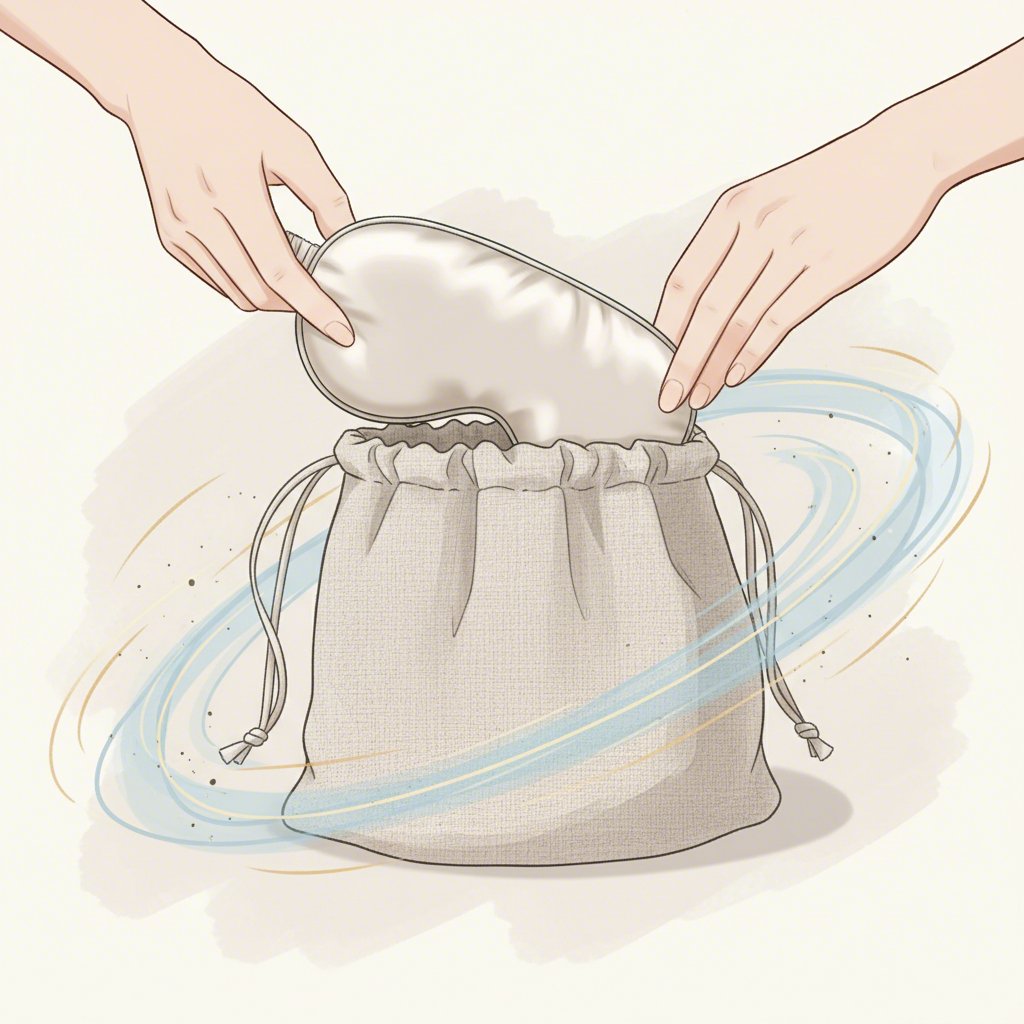
The consensus among fabric care experts is to use a dedicated, protective container. A breathable pouch, often made of silk or cotton, is an excellent choice because it prevents dust accumulation while allowing air to circulate. Manito Silk advises against airtight plastic bags, which can trap residual moisture and lead to mildew. A soft-lined box or a separate compartment in your nightstand drawer also works well to keep the mask safe from snags and crushing.
To maintain the mask's form, always store it either flat or loosely rolled. Avoid folding it tightly, as this can create permanent creases in the satin. Furthermore, as highlighted by DHgate's guide, you should never hang your mask by its elastic strap, as the constant tension will cause it to stretch out and lose its fit prematurely.
| Method | Pros | Cons |
|---|---|---|
| Breathable Pouch | Protects from dust; portable for travel; allows fabric to breathe. | Offers minimal protection from being crushed in a packed bag. |
| Dedicated Box | Excellent protection from crushing and dust; keeps mask flat. | Can be bulky for travel; less breathable than a fabric pouch. |
| Drawer Compartment | Keeps mask easily accessible; protects from light and dust. | Risk of snagging on other items if not stored separately. |
For travel, a protective pouch is ideal for keeping your mask clean inside your luggage. At home, a dedicated spot in a drawer or a stylish box on your nightstand ensures it's always ready for a peaceful night's sleep.
Key Environmental Factors to Avoid
Where you store your mask is just as important as how you store it. Satin is a delicate fabric that is susceptible to damage from common environmental factors. Protecting your sleep mask from these elements is crucial for preserving its color, texture, and overall integrity.
The three biggest threats to your sleep mask are sunlight, moisture, and chemicals. Direct sunlight is particularly harmful, as its UV rays can cause the vibrant color of your mask to fade and can weaken the satin fibers over time, making them brittle. Always choose a storage spot that is dark, such as a drawer or an opaque box.
Moisture is another significant enemy. A steamy bathroom or a damp basement is a poor choice for storage, as humidity can encourage the growth of mildew and bacteria, leading to unpleasant odors and potential skin issues. As QualityImprint points out, a cool, dry place is essential for longevity. This prevents the fabric from degrading and ensures it remains fresh and hygienic for every use.
Finally, be mindful of chemicals and strong scents. Storing your mask near perfumes, lotions, or other cosmetics can lead to staining or discoloration. The chemicals in these products can break down the fabric's fibers, while strong scents can be absorbed into the material, becoming overwhelming when you wear the mask to sleep. A simple checklist for a safe storage spot is: Cool, Dry, Dark, and Away from Chemicals.
Maintaining Longevity and Knowing When to Replace
With proper care and storage, a high-quality satin sleep mask can remain a valuable part of your sleep routine for a considerable time. Regular cleaning and mindful handling significantly extend its lifespan, but even the best-cared-for mask will eventually need to be replaced to ensure it remains effective and hygienic.
There are several clear signs that indicate it's time for a new mask. One of the most common is a stretched-out elastic strap. If the mask no longer fits snugly and slips off during the night, it cannot effectively block out light. Another sign is visible wear and tear on the fabric, such as thinning, pilling, or fraying. If the material feels less soft or you notice light seeping through, its performance is compromised.
Persistent odors that don't disappear after washing are also a major red flag, suggesting a deep-set buildup of bacteria. Lastly, if you experience any skin irritation or breakouts, it's a clear signal to replace your mask immediately. Generally, a well-maintained mask can last over a year, but it's important to assess its condition regularly. When it's time for a new one, investing in a high-quality product ensures lasting comfort. For those seeking premium options, Bincai International offers wholesale silk sleep masks that provide excellent light-blocking and OEM customization, making them a great choice for businesses or individuals looking for quality at scale.
Frequently Asked Questions
1. How should a sleep mask be stored?
A sleep mask should be stored in a cool, dry, and dark place after it has been cleaned and fully air-dried. The best options are a breathable fabric pouch, a dedicated soft-lined box, or a separate compartment in a drawer. Always store it flat or loosely rolled to protect its shape and avoid stretching the elastic band.
2. How often should I wash a satin sleep mask?
If you use your satin sleep mask nightly, it is recommended to wash it once a week to remove oils, sweat, and makeup residue. If you have sensitive or acne-prone skin, consider washing it two to three times per week to maintain optimal hygiene and prevent skin irritation.
3. Can storing a mask in the fridge damage it?
While some people store their masks in the fridge for a cooling effect on the eyes, it is not a recommended practice for long-term storage or preservation of the fabric. The cool temperature itself won't damage satin, but condensation and moisture inside a refrigerator can introduce dampness, which may lead to mildew or bacterial growth over time. It is best reserved for short-term cooling before use.


 Send Email
 售前客服
售前客服 Skype
Skype WhatsApp