



Cotton vs Polyester Drawstring Bag: Which Fabric Is Right for You?

TL;DR
For most uses, polyester is the superior choice for a drawstring bag, offering an excellent balance of durability, light weight, and water resistance. It's the practical, all-around performer ideal for sports, travel, and frequent use. Cotton drawstring bags are best for those who prioritize a natural, soft feel and eco-friendly branding, making them perfect for promotional giveaways or light daily use where moisture is not a concern.
Cotton vs. Polyester: A Head-to-Head Feature Comparison
Choosing between cotton and polyester for a drawstring bag involves a trade-off between natural feel and synthetic performance. Cotton is a natural fiber harvested from plants, known for its soft texture and breathability. It gives bags an organic, high-quality feel. Polyester, in contrast, is a synthetic polymer derived from petroleum. It is engineered for resilience, consistency, and resistance to the elements. Their fundamental differences in origin and structure result in vastly different performance characteristics.
The primary distinction lies in how each fabric interacts with moisture. Cotton fibers are highly absorbent, which makes them breathable but also means they soak up water easily and dry slowly. According to technical analysis from Szoneier, cotton has a high moisture regain of about 8%. Polyester, on the other hand, is hydrophobic, meaning it naturally repels water. It has a very low moisture regain of just 0.4%, allowing it to dry quickly and resist stains and mildew. This single property influences everything from durability to maintenance.
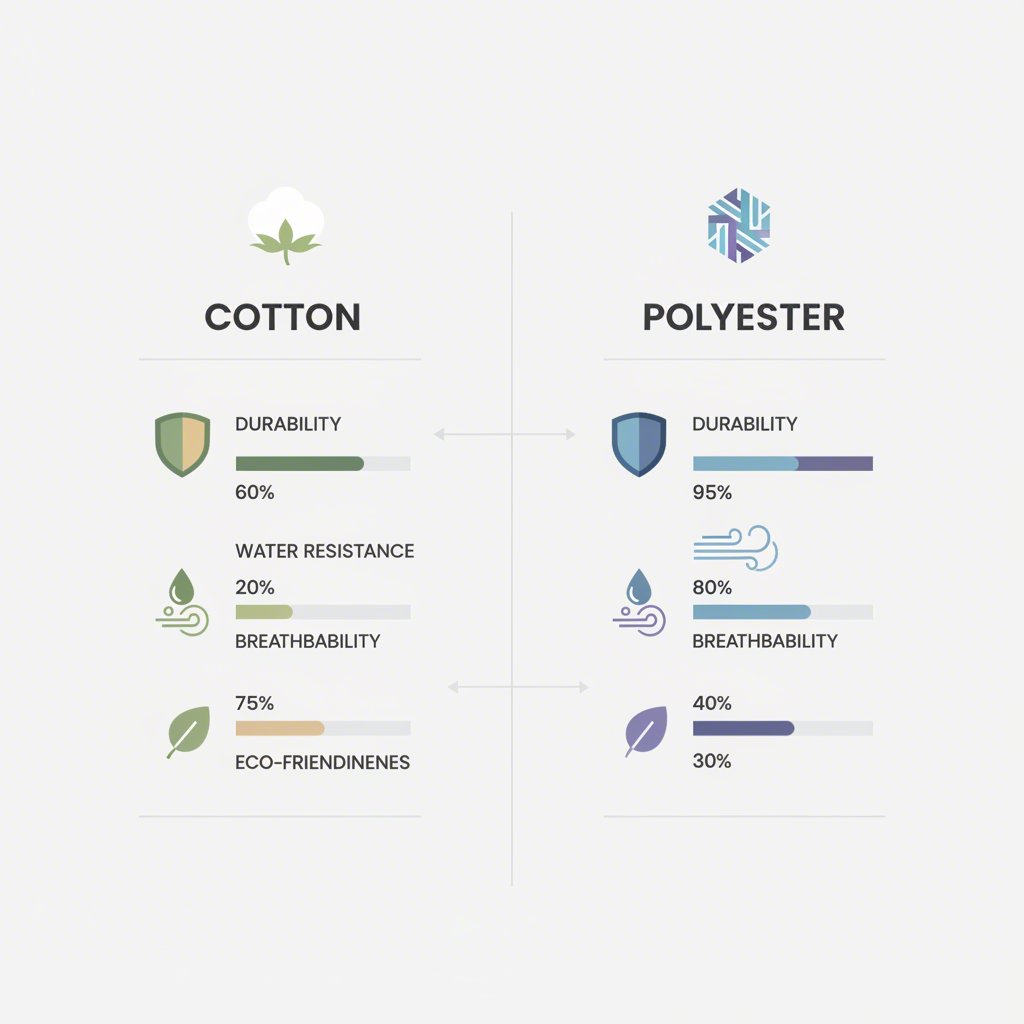
To make the choice clearer, here is a direct comparison of their key features:
| Feature | Cotton | Polyester |
|---|---|---|
| Durability | Moderately strong but can wear down with frequent friction and may weaken when wet. | Excellent. Highly resistant to abrasions, stretching, and tearing. Maintains its strength when damp. |
| Water Resistance | Poor. Absorbs moisture readily and becomes heavy and slow to dry. | Excellent. Naturally repels water, protecting contents from rain and spills. |
| Breathability & Feel | Excellent breathability. Soft, natural, and comfortable against the skin. | Less breathable. Feels smooth and synthetic, can feel less comfortable in hot weather. |
| Eco-Friendliness | Good. Natural, renewable, and biodegradable (especially organic cotton). However, conventional cotton requires significant water and pesticides. | Poor. Derived from non-renewable petroleum and is not biodegradable, contributing to microplastic pollution. Recycled polyester (rPET) is a more sustainable option. |
| Custom Printing | Good. The natural texture is ideal for screen printing and DTG (Direct-to-Garment), creating a rustic, matte finish. | Excellent. The smooth surface is perfect for sublimation printing, which creates vibrant, full-color designs that won't fade or crack. |
| Maintenance | Fair. Can be machine washed but is prone to wrinkling and shrinking, especially in hot water. | Excellent. Wrinkle-resistant, easy to clean, and holds its shape well after washing. |
Ultimately, polyester's practical advantages make it a more resilient and versatile material for bags that will face the rigors of daily use. As detailed in a comprehensive guide by Yanxin Bag, polyester consistently outperforms cotton in durability, water resistance, and ease of care. Cotton's appeal is rooted in its aesthetics and sustainability narrative, making it a choice based on brand identity and feel rather than pure performance.
Choosing Your Ideal Bag: Key Decision Factors
Moving from technical specs to practical application, the right choice between cotton and polyester depends entirely on your specific needs. The best material for a gym bag is not the best for a promotional event giveaway. By considering your intended use, budget, and values, you can confidently select the perfect drawstring bag.
First, consider the bag's primary purpose. For active use—like a gym bag, a sports cinch pack, or a travel daypack—polyester is the undisputed winner. Its resistance to abrasions, moisture-wicking properties, and lightweight nature make it ideal for handling sweaty clothes, unexpected rain, and frequent use. Cotton would quickly become heavy, damp, and prone to mildew in these scenarios. Conversely, for promotional events, retail packaging, or as a fashion accessory, cotton's premium feel and eco-friendly image can be more valuable. A cotton bag communicates a message of natural quality and sustainability.
Your budget also plays a critical role. Polyester is generally more cost-effective to produce, making it the go-to option for large bulk orders where keeping costs down is a priority. Cotton, particularly organic cotton, has a higher raw material and processing cost, which translates to a higher price per bag. This makes it a better fit for premium brands or situations where the bag itself is part of the product's value proposition rather than just a simple carrier.
To help guide your decision, ask yourself the following questions:
What will I carry in the bag? For heavy or sharp items, polyester's durability is essential. For light items like pamphlets or a t-shirt, cotton is sufficient.
Will the bag be exposed to weather? If there's any chance of rain or spills, choose polyester for its water resistance.
How important is a natural, soft feel? If the tactile experience is a priority, cotton's softness is unmatched.
Is environmental impact a key concern? If so, organic cotton is a strong choice, though recycled polyester (rPET) offers a sustainable alternative in the synthetic category.
How often will the bag be washed? For a bag that needs frequent cleaning, polyester's ease of care and resistance to wrinkling and shrinking is a major advantage.
Beyond the Basics: Other Materials and Customization Options
While cotton and polyester dominate the market, they are not the only options. Understanding the alternatives can help you find a material perfectly tailored to a specific niche. Nylon, for instance, is another popular synthetic that is even stronger and more durable than polyester, making it ideal for high-stress applications. However, it absorbs slightly more water than polyester and is typically more expensive.
Canvas, which is a heavy-duty type of cotton, offers enhanced durability while retaining a natural feel, making it great for rugged tote bags or backpacks. For situations requiring breathability, such as carrying sports shoes or wet swim gear, mesh is an excellent choice. As noted in a fabric guide on Initibag, matching the fabric to the activity is crucial for performance.
Customization is another key factor, especially for promotional or branded bags. The material you choose directly impacts the printing methods available. Cotton's absorbent fibers are well-suited for screen printing, which produces a classic, painted-on look. Polyester's non-porous surface is perfect for sublimation, a process where dye is infused directly into the fabric, resulting in incredibly vibrant, permanent, full-color designs that will never peel or fade. For businesses looking into large-scale custom orders, companies like Bincai Import and Export Co., LTD specialize in creating bespoke sewing products, including custom-printed drawstring bags, to match specific branding needs.
Ultimately, exploring these alternatives allows for a more nuanced choice. For a high-performance sports bag, nylon might be the best investment. For a heavy-duty book bag, canvas is a reliable option. By considering the full spectrum of materials and customization techniques, you can create a drawstring bag that is not only functional but also perfectly aligned with its intended purpose and brand identity.
Frequently Asked Questions
1. Is a polyester bag better than a cotton bag?
For general durability, weather resistance, and ease of care, a polyester bag is better. It is stronger, repels water, resists wrinkles, and is often more affordable. However, a cotton bag is better if you prioritize a soft, natural feel, breathability, and a more eco-friendly material (especially organic cotton).
2. What materials work best for drawstrings?
The drawstring cord itself can be made from various materials. Common choices include braided polypropylene cord, which is durable and water-resistant, making it a good match for polyester bags. Other options include cotton cording for a softer feel, twill tape, ribbon for a decorative touch, or even leather for a premium look.
3. Is 60% cotton 40% polyester ok?
Yes, a 60% cotton/40% polyester blend (often called a CVC or Chief Value Cotton blend) is an excellent choice that offers a good balance of properties. This blend combines the softness and breathability of cotton with the strength, durability, and wrinkle resistance of polyester. It provides more comfort than 100% polyester but is easier to care for than 100% cotton.


 Send Email
 售前客服
售前客服 Skype
Skype WhatsApp